One Brick at a Time:
Crafting Compelling Scenes
March 3 – March 31, 2026
Deadline: January 18, 2026
Instructor:
Barbara Ashford
Level:
Intermediate
Live Class:
7 pm-8:30 pm EST
Tues., March 3
Tues., March 17
Tues., March 31
Tuition:
$259.00
Course Description
Compelling scenes pull readers into a new world, evoke an emotional response to the characters and conflicts, and encourage readers to turn the page to find out what happens next. Failure to fine-tune these essential building blocks of your story can dilute its power and impact.
This course will explore ways to help you add tension, drama, and power to your scenes by
• examining the fundamentals of scene design—from its overall shape to its individual beats;
• exploring the characteristics of effective scenes and the common pitfalls that can undermine their impact;
• providing tools to diagnose “ailing” scenes and bring them back to life;
• discussing the “special needs” of opening and closing scenes, and flashbacks;
• considering each scene as “part of the whole” by understanding its role in developing characters, showcasing the world, and fulfilling the implicit promise you are making to readers.
The course is intended for all fiction writers, with an emphasis on those who write fantastic fiction, and is appropriate for writers of middle grade, young adult, and adult fiction. It will be most valuable for intermediate writers, since it assumes students already understand the basics of writing.
Each student will have a private meeting with Barbara. Students will also provide critiques of their classmates’ work and revise their work in response to feedback.
Our goal as a class is to provide a supportive yet challenging environment that will help students improve their writing. You must be ready to hear about the weaknesses in your writing and to work to strengthen them. You must also be ready to give honest, helpful feedback to your classmates.
Assignments:
Students will have some homework assigned before the first meeting, and will also be assigned homework during the course.
The first assignment will have a due date of March 2, the day before our initial meeting.
Homework will be assigned on March 3 and 17, with due dates, respectively, of March 9 and 23. You will also be required to provide critiques of some of your classmates’ work, which will be due on March 16 and March 30. Any student who misses a deadline may be expelled from the class and will receive no refund.
All assignments should be properly formatted and should be submitted in MS Word files or rich text files.
You should reserve a minimum of 5 hours per week to complete homework.
Assignments will include readings, critiques, scene submissions, and scene analysis. Barbara will provide feedback on your homework before the next class session.
The number of critiques students will be required to write is determined by class size; for a maximum class size of 14, students should expect to read and critique 3-4 submissions for each homework assignment. Students will also be required to reply to online discussion questions during the course.
Students are expected to follow the policies about assignments and class materials in the Odyssey Online Student Handbook.
Students will be required to read a lesson on critiquing before the course begins.
Attendance:
Since we will have only 3 class meetings, attendance at every class is necessary for students to get the most out of this course.
You are expected to attend all classes, except in cases of emergency. In such cases, you should notify the instructor.
Classes will be recorded and made available to students for a limited time.
Any student who misses more than one class may be expelled from the course and will receive no refund.
It is your responsibility to find out what happened in any classes you missed and to complete homework by the deadlines.
Students are expected to follow the policies about attendance and behavior set out in the Odyssey Online Student Handbook.
Texts:
Students will be required to read scenes excerpted from various novels and short stories, as well as chapters on scene structure and story by such writers as James Scott Bell, Bill Johnson, and Donald Maass. All required readings will be provided to students before the course begins.
Technical Requirements:
Technical requirements for all Odyssey Online Classes are covered on the Online Classes page.
Tentative Schedule:
March 3: First class meeting. Introduction and orientation. The fundamentals of scene design. Story objective vs. scene objective. Scenes and sequels. James Scott Bell’s “four chords.” Understanding scene polarity. Techniques for hooking readers. Keys to creating powerful opening scenes and common pitfalls that can undermine their effectiveness. Understanding the promise of your story and how each scene supports it. Theme as the controlling idea. How readers connect with characters. Assignment of homework.
March 9: Homework is due.
March 16: Critiques are due. Homework is returned with Barbara’s feedback.
March 17: Second class meeting. Discussion of previous homework assignment. Techniques for building intensity within a scene and creating scene endings that prompt readers to turn the page. Raising the stakes and stretching tension. Engaging readers by posing scene questions. Identifying inner and outer turning points in a scene. Using beats to deepen characterization, conflict, and emotional turning points. Assignment of new homework.
March 23: Homework is due.
March 27: Some students will have private meetings with Barbara between 7:00-8:00 PM EST.
March 28: Some students will have private meetings with Barbara between 7:00-8:15 PM EST.
March 29: Some students will have private meetings with Barbara between 7:00-8:15 PM EST.
March 30: Critiques are due. Homework is returned with Barbara’s feedback.
March 31: Third class meeting. Discussion of previous homework assignment. Creating compelling dialogue. Using subtext to deepen impact on readers. Pacing, rhythm, and emotional tempo. “Special needs” scenes: set-ups and pay-offs, flashbacks, and endings. Diagnosing and treating “ailing” scenes. Fulfilling the promise you make to readers. The relationship between your opening and closing scenes. Evaluating the effectiveness of your ending. Practical tips and resources.
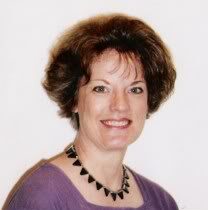
Instructor: Barbara Ashford
Award-winning novelist Barbara Ashford has been praised by reviewers and readers alike for her “emotional, heartfelt” storytelling.
Barbara’s first published series was the dark fantasy trilogy Trickster’s Game (written as Barbara Campbell). Published by DAW Books, Trickster’s Game was a finalist for the Mythopoeic Society’s Fantasy Award for adult literature.
Barbara’s background as a professional actress, lyricist, and librettist has helped her delve deeply into character and explore the complexities of human nature on the stage as well as on the page. Her most recent musical—Just Desserts—opens in New York City in January 2026.
She drew on those musical theatre roots for her second series of novels, the award-winning Spellcast and its sequel Spellcrossed, set in a magical summer stock theatre. DAW Books released the two novels in an omnibus edition: Spells at the Crossroads.
A graduate of the Odyssey workshop, Barbara has taught for Odyssey and served on the staff of the Odyssey Critique Service for more than a decade. She is also an independent developmental editor, specializing in speculative fiction. You can visit her dual selves at barbara-campbell.com and barbara-ashford.com.