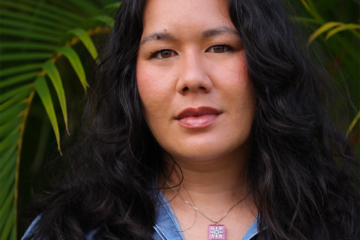
Q&A Excerpt: Tim Waggoner

Award-winning author Tim Waggoner is a 2023 guest lecturer for the Your Personal Odyssey Writing Workshop.
Tim has published over fifty novels and seven collections of short stories. He writes original dark fantasy and horror, as well as media tie-ins, and his articles on writing have appeared in numerous publications. He’s won the Bram Stoker Award, the Horror Writers Association’s Mentor of the Year Award, and he’s been a finalist for the Shirley Jackson Award, the Scribe Award, and the Splatterpunk Award. He’s also a full-time tenured professor who teaches creative writing and composition at Sinclair College in Dayton, Ohio.
In this excerpt transcribed from a question and answer session, Tim talks about his path to consistently selling stories and the differences between short story and novel writing.
QUESTION: I was wondering, what do you think led to you starting to sell stories consistently? What changed for you, or how did you grow your craft?
TW: That’s a really great question. One year, I was probably around thirty or so, I was conducting a writer’s workshop at a very small con in Columbus that has since died. But I was there, and I brought in Gary Braunbeck and Charles Coleman Finley—he just lately was the editor of F&SF, he was just kind of starting out [then]—and we were just doing a Q&A, and somebody said, “How did you know when you did it? Like, you wrote something that was, you know, professional level, that you knew was good?” And we had not talked about it before, we’d never thought about it, but we all told the same story: we were writing a short story, and we got two-thirds of the way through when we realized how good it was, and we stopped, terrified we’d screw it up. And then we all took a deep breath and went back and finished it, and those were all our first professional sales. I don’t know if that’s a coincidence or how common that is.
A lot of it was—you know, in the early days when there wasn’t email or anything for me, I realized that I’d get feedback from small press publications more than big ones, so I started submitting exclusively to those for like two years and collecting rejection slips. And then what I did with them is … I literally spread them out on the floor after two years and collated everything so I could see, “Oh, these five editors say my beginnings are too slow,” and … these say, “Oh, I’ve got chunks of exposition like this,” and that gave me a to-do list for what I needed to do to fix my fiction.
And the other thing was writing the stuff that only I could write, just letting myself do that. The short story I wrote, my first professional short story, was one that—my writers group at the time thought something was wrong with it in the ending. … I tried to rewrite it, and I was like, the hell with it. This is the way I want it. This is what I’m gonna do. And then it just seemed to work from that point.
Before that, I did spend weeks talking into a tape recorder. I was trying to find the things that were just me, the stuff only I could write about. I never listened to those tapes. I’ve sent them on to my—I’ve got my stuff archived at the University of Pittsburgh’s horror archive program. They have them all. I have no clue what’s on them. Probably a lot of embarrassing stuff. But that helped too because it gave me an idea of, like, what things I was kind of obsessed with and thought about.
I started writing down things that I paid attention to in the world that nobody else did, that I noticed, and then when I need a story idea I sometimes go back and look through them. For short stories, I’ll often look for three separate things that I could put together. So I look for a cool idea; something from my own life nobody would know, but something from my own life so I can invest it with reality; and then some kind of emotional aspect. And those three things tend to—if I do that, they tend to work together pretty good.
QUESTION: My question is more about the difference between writing short stories and writing novels. … I’d just love to hear more about, you know, what do you take from short stories as you build novels, what techniques kind of scale up, and then more about the differences between the two for you?
TW: Well, you know, short stories tend to begin—you can do it all kinds of ways—but they tend to begin as close to the climax as possible. Everything’s smaller, so you tend to have, like, two or three characters at the very most. They need a strong emotional core to them and need a strong, just, basic concept to them. They don’t tend to be as action packed because you can’t really do action really well in the short form, so they tend to be more about character, they tend to be more about maybe the character’s reaction to things, like in horror stories.
With novels, often especially like with—one of the things horror novels often do is they follow kind of an investigative mode because that gives you some kind of structure. So people will, you know, at first they may resist believing what’s going on, or they try to get away from it or whatever, but eventually they have to turn around and try to figure out what it is, and it becomes sort of an investigative mode at that point.
One of the things that I talk about—I almost stuck this in the presentation, but I decided it was getting too long—is a pattern of … anticipation, confrontation, and then aftermath, which you find—you can find it in anything, but it works really well in horror. … And so, I guess, you can do this in a short story just fine, but you could also use this for scenes … the confrontation could just be for what’s going on in that particular scene. But you could use it for your entire novel, too, if you can figure out what the confrontation point’s gonna be, then you can have the various threads that might move toward it.
The novel tends to be—you can still have the same story, the same kind of concept maybe as a short story, but it can affect more people, it can affect them on different levels. It could be over a longer period of time. …
But usually for me it’s the different characters, and sometimes I think about the different aspects, like the story of the blind man and the elephant, where each character gives you a different part, and the reader can start to see the pieces coming together in a way that the blind man can’t because until they compare notes—I don’t even know in the story if they know which part of the elephant’s the front, so who knows what eventually they would do. I’m sure they’d figure it out eventually somehow, as long as the elephant was cooperative enough to stand there and let them touch it enough times.
But you might think in terms of … the short story is like the story of somebody discovering a trunk on the elephant, but the novel is the trunk and the feet and the tail and the tusks and the ears and the this, and then how all that comes together, and then what do all these characters do about it? I mean, what happens to them? That’s a new example for me. I think it’s okay? I think it kind of works.
But, you know, a lot of it is also just from what you want to do. Some people—you don’t have to write these gigantic, sprawling novels, you know. The novels can be shorter, they can still focus on just one or two characters. You know, mystery novels tend to do that, where it focuses just on the point of view character. You know, mysteries are great cause they’re the story of uncovering a different story. And the first story that’s uncovered is uncovered in any order that you want. It doesn’t matter.
Donald Maass one year, the agent I was talking about before who used to write mysteries … showed me a grid that he had for just doing mysteries, and at the side he had “means, method, motive, and opportunity”—I think, he might have one more—and at the top he just had the characters, and he made a grid, and he said all you have to do then is—your detective can do this in any order you want—but you just keep checking off like, “Oh, this one had means, and this one had the method, this one had opportunity.” And he said eventually, when all the checks are filled in, that’s when the mystery’s over. And he said you could write a million mysteries this way, and they can be in any kind of fashion.
So, even if you’re not doing a mystery, you could do that with story elements. You could put the different story elements on one side, the different characters up here, and kind of decide when they encounter anything, and maybe just kind of use that as your guide to plot through. And you don’t even have to make conscious choices about it. You could just, “Okay, this is Sally’s turn to deal with this part, and let’s see what happens.” And it would not be the same thing. She would—Sally—if she’s going to encounter the vampires in town, she would encounter something different about them at that point. But it would be her turn to do that and add one more piece.
That might be a good way to do a mosaic novel too, now that I think about it. You could probably use that little grid system for that.
NOTE: This transcript has been edited for clarity.
Discover more from Odyssey Writing Workshops
Subscribe to get the latest posts sent to your email.