Interview: Graduate Arley Sorg
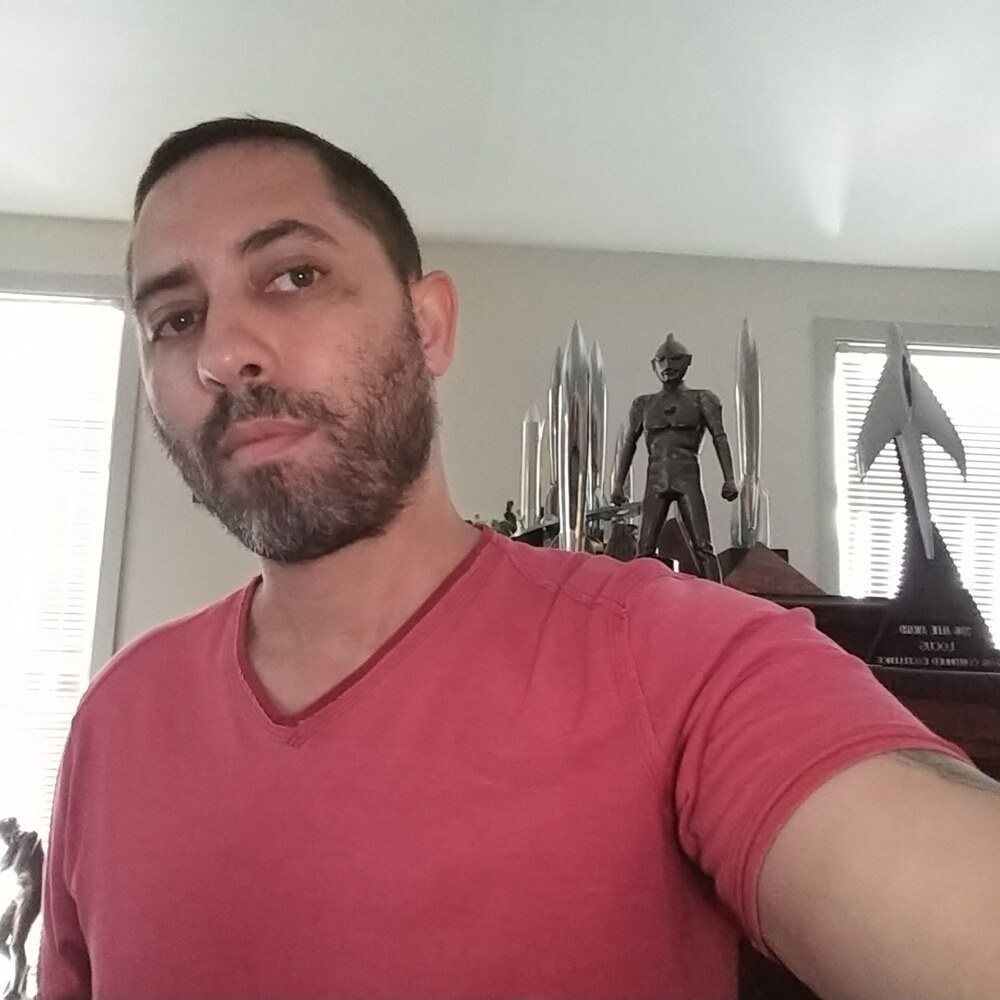
Arley Sorg is a 2014 Odyssey Writing Workshop graduate. He is an associate agent with kt literary, co-editor-in-chief at Fantasy Magazine, senior editor at Locus Magazine, associate editor at both Lightspeed and Nightmare Magazines, and a columnist for The Magazine of Fantasy and Science Fiction. He takes on multiple roles, including slush reader, movie and book reviewer, and interviewer, at multiple venues, including Clarkesworld Magazine and his own site: arleysorg.com. Arley grew up in England, Hawaii, and Colorado and studied Asian Religions at Pitzer College. He lives in the SF Bay Area and usually writes in local coffee shops.
You have been providing critiques for Your Personal Odyssey. What do you feel is the best way for writers to incorporate the feedback from critiques?
Each writer has to figure out if the feedback is actually helpful. Seeing someone as an “expert” does not mean they are automatically “right.” On the other hand, sometimes writers want to feel like their work is awesome, and they may reject feedback which could actually improve the work. There is no easy answer, because person to person, story to story, each situation is unique. Writers have to navigate this journey in their own ways, they have to figure out for themselves when feedback doesn’t work and when it does. Experiment, try different things, and be as honest with yourself as you can be.
You attended Odyssey in 2014. How are the critiques you provide now different from the ones you provided to your cohort in 2014?
Back then, I was very hardcore. I was known as a straightforward, somewhat harsh critiquer. It wasn’t that I wanted to hurt people, but rather, I believed it was more helpful to be straightforward and honest, even if the writers might have a hard time hearing it. I’ve changed a lot in my approach, partially because I no longer believe that everyone is “right” all the time, so there’s always a chance that the feedback I’m giving isn’t a good fit for the author’s work. The other thing is, I’ve realized that some people are traumatized by the critique process—I’m not here to stop people from writing; I’m here to encourage them. I still give fairly straightforward feedback, but I include more positive notes and try to reaffirm the author’s sense of creative agency. Their ability to continue writing is far more important than me feeling like I’m “right.”
Congratulations on receiving the Space Cowboy Award! The award, per Space Cowboy Books, is given annually “for supportive endeavors and excellence in the field of science fiction.” You are known for being a positive, supportive member of the speculative fiction community. How can writers, editors, and other members of the speculative fiction community make positive contributions?
Thank you! I think a lot of people, when they engage with the speculative community, they start out by trying to figure out what they can get, what they can gain. They want to be seen and recognized, they want to meet people they see as “important” or “advantageous” and so on. Making truly positive contributions will usually come down to doing things for reasons other than your own gain, your own advantage. Not to mention, seeing everyone as inherently valuable and worthy, understanding that an agent or editor is ultimately just a person, and that an unpublished writer doesn’t deserve judgment or scorn. For me, a lot of it starts with having been in some situation. For example, I’ve been a new person to the industry, who is at one of their first conventions, and who is the only person of color there. I am no longer someone who doesn’t know how to get around at conventions, but I can use my experiences to try to help people when they feel unmoored and overwhelmed and particularly out of place—even if helping them doesn’t “gain” me anything. I know what it’s like to feel awkward and out of place and whatever else, and there’s no reason someone has to feel that way if I am able to help.
What advice do you have for writers who are looking to take their craft to the next level?
You can learn so much from reading, from thinking about what works in a piece, from understanding how the author engaged you or pulled you in. Really, classes are, at their best, teaching you how to understand what authors are doing. It is more important to understand how someone made a piece work than it is for a writer to adapt any particular practice. Not every technique works for every writer; sometimes an approach which works really well in one story just doesn’t fit another. Learning how to learn, playing around with things, figuring out what takes you to the next level, that’s the journey, in my opinion.
What advice would you give writers to get the most out of a workshop like Odyssey?
Be open minded. Try different things. We put too much pressure on ourselves to be perfect, and to do it quickly. It’s okay to draft, and to do it over and over. Some of your favorite stories were originally in a different point of view, or originally about a different idea, or featured different characters, and so on. What you get from Odyssey is a ton of different things that you can try out. Have fun with it!
Congratulations on recently joining kt literary as an associate agent! Many authors struggle to write synopses of their novels to submit to agents and publishers. What do you want to see in a synopsis? How long do you like it to be?
Thank you so much! I think a query letter (which usually features a synopsis) can just be a few sentences. The idea isn’t to convey every detail of the story, but rather, to convey the most important or most compelling elements. You may think you need to add more, but keep in mind that the agent will read through hundreds of queries, so adding more will not help your cause. Frontload whatever is most interesting about the story, don’t bury it.
Most writers don’t understand that an agent can only represent a limited number of authors, and that agents specialize in particular types of fiction. Can you discuss how many authors you plan to represent and why you’ve settled on that number? Can you describe the areas that you specialize in and why you’ve chosen those areas?
This is a really good point. Right now, I have no authors. I have over 360 queries to read, I think seven or eight partials, and maybe twelve full manuscripts. I think writers forget that agents are people. They imagine us at a desk, staring at a screen, perpetually waiting for authors to send us something. But any agent out there has the concerns of their lives to deal with—family emergencies, health problems, quarrels with lovers, depression, and so on. Many have other jobs. One of my associates took a couple days off and had over two hundred emails to deal with upon their return. This is all stuff that writers tend to forget; they will fixate on the query they sent, or the manuscript, and wonder why it’s taking so long—they will think it means something about them or their work, which usually isn’t true.
I think for me, I don’t want to start with too many authors because I want to be the best partner I can be to the authors I sign. If I take on too many at once, I can’t represent them in the way they deserve. I don’t know yet what that number is, nor what my upper limit will be. So much will depend on workflow, timing, and so on. As an agent, there’s a lot of work that authors don’t see and aren’t aware of. Since my focus is really on doing my best for my authors, knowing my limits and managing workflow is a priority. Believing in the work and the author is also a priority. I want to feel passionate about the work; this is more important to me than just finding someone I think will sell. I’m very interested in authors with something to say, folks who bring valuable perspectives to the field, but can deliver these perspectives via great storytelling. N. K. Jemisin, Rebecca Roanhorse, R. F. Kuang, Tochi Onyebuchi, Ken Liu—these are just a few of the many writers I really admire.
I’m mainly focusing on adult SFF (including speculative horror) because I’m more familiar with what’s going on in these markets. I dabble in YA as a reader and a reviewer, and I can see myself advocating for authors who have a range of interests, who may want to do different kinds of projects—YA, graphic novels, etc. But the SFF/H is a good starting point.
Discover more from Odyssey Writing Workshops
Subscribe to get the latest posts sent to your email.