Q&A Excerpt: David Corbett
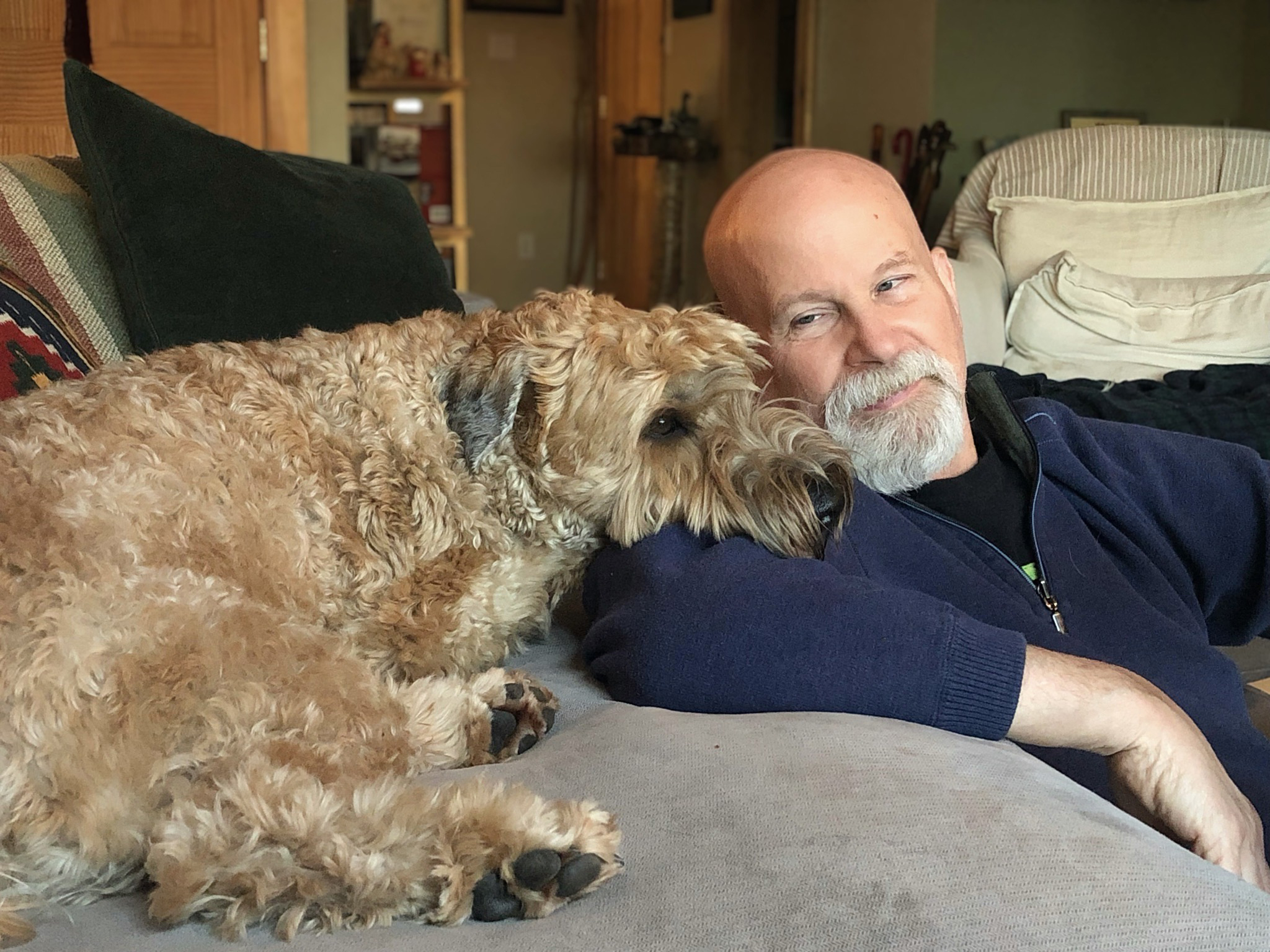
David Corbett was a 2023 guest lecturer for Your Personal Odyssey Writing Workshop. David is the author of seven novels, which have been nominated for numerous awards, including the Edgar®. His second novel, Done for a Dime, was a New York Times Notable Book, and Patrick Anderson of the Washington Post described it as “one of the three or four best American crime novels I have ever read.” His latest novel, The Truth Against the World, was published in June 2023. Corbett’s short fiction has twice been selected for Best American Mystery Stories, and a collaborative novel for which he contributed a chapter—Culprits—was adapted for TV by the producers of Killing Eve for Disney+ in the U.K. His non-fiction has appeared in the New York Times, Narrative, Writer’s Digest, and other outlets. He has written two writing guides, The Art of Character (“A writer’s bible”) and The Compass of Character, and he is a monthly contributor to Writer Unboxed, an award-winning blog dedicated to the craft and business of fiction.
In this excerpt transcribed from a question and answer session, David talks about the importance of identifying what you love about your project and how to write subtext.
QUESTION: So I’ve been re-evaluating my writing process this week and thinking about craft since I’m starting a new project, and so I was wondering: what do you find is the biggest weakness in your writing these days and how are you coping with that?
DC: My biggest weakness is, after having written seven novels, I’m . . . highly respected and widely unread. And after receiving pretty big critical acclaim and having been at one point the writer with promise, and then being dropped by that publisher and then having to struggle and find my way—it isn’t so much that I doubt my craft, it’s I doubt whether it’s worth it. And I had to rediscover why I do it and why I love it.
My major question is: what do I love about this story that I’m working on, and why is it necessary for me to write it? That’s my biggest challenge. I’m working on a new series, and I really am enjoying it. Like I said, it’s the first time I’ve ever done first person. I love my narrator protagonist. He’s a bit of a wise guy. He’s Irish. And he’s been around. I just find writing from his perspective has brought me back some of my juice.
But I’m also writing dystopian fiction and the hard part—and this is the craft issue—is how do you write about the future when it could be anything? And there’s so much to know, from what will shipping be? What will the climate be? What will the politics be? What will medicine be? How healthy will people be? All that, and then you sit there and go, “It could be anything.” And sooner or later, you just gotta stop asking the question and say, “This is the way it’s going to be in this book. That’s it, I’m done. I’m done asking. This is the way it’s going to be.” Just embrace your story world and go.
And that’s been the other big thing kind of holding me back. Research can become, I call it, one of the most entertaining forms of writer’s block. “Yes, I just need to do more research. I just need one more book, and one more reference. Oh, oh, oh, wait, wait, oh, you know what? That’s interesting, I’ll track that down.” And next thing you know, you’ve spent four years researching a book you haven’t even begun to write. And it’s just a way of avoiding getting words on the page.
We’re all scared of the empty page. That’s the other thing. There’s nothing scarier than that blank page. And the thing about it is, you just start putting words down. Write the first sentence. After that first sentence, okay, then write another one. Okay, finish that first paragraph. Great, write the next one. And just get it down. Since writing is rewriting, you can’t revise what you haven’t written. So just get something down.
QUESTION: You touched on subtext earlier and talked about how behaviors, especially the pathological maneuvers, can create subtext where readers are wondering, “Why is the character behaving this way?” and maybe figuring it out. And I was just wondering if you could talk a little more about subtext and other ways that subtext about characters can be generated?
DC: I learned subtext from Pinter. I studied acting . . . and Pinter is nothing but subtext. Nobody ever says anything in a Pinter play that’s really on their mind. It’s always misdirection. It’s always an attempt to perform an action.
I think one of the great ways to understand how to use subtext is to understand that dialogue is action. You’re not just talking. You’re trying to persuade. You’re trying to fool. You’re trying to seduce. You’re trying to dictate terms. You’re trying to win the argument. … There’s a strategy, there’s an action, and that’s what’s really going on. And the words are only a means to do that other thing. The action is the subtext. The text is what they’re saying to go about it.
And if you think of subtext as what the writer’s trying to accomplish—what’s being revealed is the way they’re going about it, with the understanding that if I’m direct, I might get denied. So I’m gonna try this misdirection or this other way of going about it, which also is often rooted in the pathological maneuvers we talked about before. I dare not go directly at this. Let me try this instead. Let me tell a joke. Let me tell them how lovely they look or spin a story to see if I can wind them in and get them to do what I want them to do.
The subtext is what the character is trying to accomplish. The text is whatever strategy they’re using to go about it. You don’t reveal what they’re actually after. You reveal the way they’re trying to go about it. And then the reader is trying to figure out, “What’s going on here?”
That’s, I think, the most concrete way to understand and to go about creating subtext. It’s what isn’t being said. But then you ask, “Why aren’t they saying it?” And there’s usually a reason. Either they’re incapable of saying it, they’re unwilling to say it, or saying it would betray what they’re actually trying to accomplish. They need to lie to go about what they need to do. They need to flatter to do what they need to do. They do whatever it is. The action that they’re using does not directly reveal what it is they’re actually trying to accomplish.
NOTE: This transcript has been edited for clarity.
Discover more from Odyssey Writing Workshops
Subscribe to get the latest posts sent to your email.