Q&A Excerpt: Jessie Mihalik
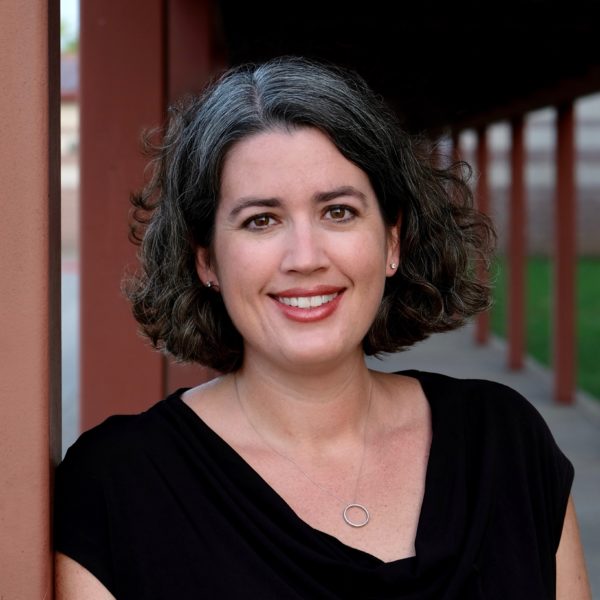
Jessie Mihalik was a 2024 Your Personal Odyssey Writing Workshop guest. Jessie has a degree in Computer Science and a love of all things geeky. A software engineer by trade, Jessie now writes full time from her home in Central Texas. She’s the author of three romantic space opera trilogies and an upcoming romantasy duology, and all of her books feature smart, dangerous women and secretly smitten men. Her latest series include Hunt the Stars, Eclipse the Moon, and Capture the Sun.
Jessie grew up reading science fiction and fantasy, and she found her love of romance by sneaking her grandmother’s Harlequins instead of doing homework. For her own books, she combined the two genres, and she loves to explore the mixture of fast-paced SF/F action and slow-burn romance. When she’s not writing, she can be found playing co-op video games with her husband, trying out new board games, or reading books pulled from her overflowing bookshelves. Find her online at www.jessiemihalik.com.
In this excerpt transcribed from a question and answer session, Jessie talks about how to incorporate worldbuilding details into your story and how to move forward when you’re stuck but have no outline.
QUESTION: How can you reveal stuff about the worldbuilding, like the magic and history of the universe or secondary world, so that the reader doesn’t get confused, but without info dumping on them? I have a lot of sympathy now for writers who, when I would read their fantasy books and they had a lecture on the history of the world, I would be like, “No one wants this right now.” But now as I’m writing, I’m like, “It would be amazing if I could give them a lecture about my world right now so they wouldn’t be confused.” But I know it’s not the right thing to do. So how can I resist this impulse and insert worldbuilding naturally and non-confusingly?
JM: One thing is that sometimes an info dump, as long as it’s a short info dump, is really the most compact, easiest way to get that data, to get that information out there. I know everybody is down on info dumps and, true, if … they go on a quest, and instead of a quest, you have seventeen pages of worldbuilding—that’s the info dump you don’t want. But if you have, like, a paragraph? Not so bad.
The other way is to show it from your character’s perspective. Your character sees something in the world, they see a woman casting a spell to clean her front porch, and they’re like, “Oh yeah, she must be whatever-magic-type-that-is because her magic was blue” or whatever. Through the eyes of your character, you can work in that sort of worldbuilding stuff a little more subtly than actually just doing the info dump.
The kind of tropey, not-the-best-but-it-also-works way to do it is to have your character explain it to somebody else, which is sort of like borderline info dump. But if you make a good plot reason—you can get away with many things if it has a good plot reason for why you’re doing it. So that could work. “Oh yeah, this out of towner has no idea that here all of our magic is purple because reasons.” So something like that could help as well.
QUESTION: You mentioned you were a pantser and that you like to start at the beginning, and you go all the way to the end, and you just kind of go through it that way. But I’m wondering, do you ever find that you get stuck? Or do you find a moment where you don’t know which way to go, or you don’t know how to get from point A to point B? And if it does happen to you, what are your strategies in managing that?
JM: I definitely get stuck. That is a thing that happens. When I start writing, my ideal, even though I don’t plot and I don’t outline, is I kind of have an idea what’s gonna happen somewhere in the midpoint of the book. And so I’m writing towards that. And then hopefully by the time I get to the midpoint of the book, I kind of have an idea what’s gonna happen at the end of the book, and I write towards that. But for me, part of the joy of writing is experiencing all the little detours that my brain comes up with, sort of in the background. Like background processing, where I’m like, “Oh, I had no idea!” In one of my trilogies, something that I randomly put in book two became super important in book three. And I hadn’t done that on purpose, although if anybody asks me, I will now claim that I did.
But if I get stuck, it generally means something is not working right. Like, my brain is trying to tell me that something about this scene or the plot or where I’m going is not working. And so because I’m somewhat stubborn, I will sit at my desk and write twenty words all day and bang my head against the keyboard, and then I will go and do dishes or take a shower or go for a walk or whatever. And while I’m doing that other thing, especially something that doesn’t require a lot of thinking, that will give my brain time to process what’s going on and what’s wrong. And hopefully it will, you know, nudge me along.
If I get incredibly stuck, I will actually skip time. So I put in brackets, “to do, fix all of this,” and then skip forward. And that will generally—if I start writing there and I know where they are at that point, then I can bridge the gap. But I really try to reserve that as a last resort because the winding path, for me, is part of my process. I find the most interesting parts while I’m sort of doing the exploration of how they get to where they’re going. But yeah, getting stuck is completely normal. It happens all the time. And just giving yourself time to process that often will help.
NOTE: This transcript has been edited for clarity.
Discover more from Odyssey Writing Workshops
Subscribe to get the latest posts sent to your email.