Interview: Graduate Shen Tao

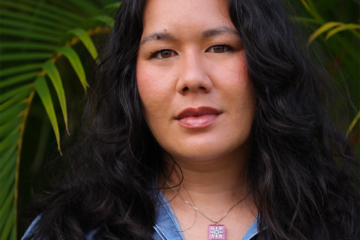
Shen Tao is a graduate of Your Personal Odyssey. Her debut fantasy, The Poet Empress, is coming out January 2026 with Tor Bramble (US) and Gollancz (UK).
Born in China and raised in Toronto, she has since moved to the Pacific Northwest, where the rain doesn’t bother her one bit.
You can find her online at shentao.ca or on Instagram @storygoose.
Shen Tao — Interviewed by Rebecca Roland
Your debut novel, The Poet Empress, comes out in January 2026 and features a woman who plans to use forbidden poetry magic to kill a prince. How did you come up with this unique magic system? Did you come up with the magic system first, or the protagonist, or did the origin of this novel start with some other idea altogether?
The origin of The Poet Empress is not so much the magic system as how it’s used. Most of the pieces were there from the beginning—an impoverished young rice farmer chosen as a concubine, a violent and despotic prince, a historically-inspired setting filled with nature and poetry magic—but the story didn’t truly come together until I figured out the poem at the center of it: “the heart-spirit poem.” A powerful spell that, if written, could kill its target—even an otherwise unkillable heir to the dynasty. But there’s a catch: it’s also a love poem.
That’s why it’s such a difficult spell to write. As a character in the novel puts it, “To be the judge of whether it is necessary for someone to die, one must love them first. But once there is love, it becomes very hard to still want them dead, does it not?” It’s almost a catch-22.
The moment the heart-spirit poem came to me, I knew there was a story to tell. Especially because the obstacles the main character Wei faces seemed insurmountable. Not only does she have to write a love poem for someone she despises, she also has to survive deadly court intrigue and learn to read in secret, because in the Azalea Dynasty, literacy is forbidden to women.
You are a graduate of Your Personal Odyssey, and you completed two custom modules as part of the workshop. Can you describe your YPO experience?
I attended YPO not long after The Poet Empress sold in a two-book contract and spent the workshop both deepening my study of craft and working towards the second book’s outline. Because we had sold The Poet Empress to a romantic imprint, I wanted to push myself to improve at writing romantic stories. This wasn’t part of the established Odyssey syllabus, but Jeanne took the extra time and care to put together a customized module for me, complete with resources, reading material, and assignments.
We also customized the course to discuss top-of-mind concerns such as writing series, POV, characterization, and making the transition into being a professional author. Jeanne’s generosity and far-ranging expertise means that the YPO experience can be very much what a student wants to make of it.
What made you decide to attend the Odyssey Writing Workshop?
While there are many opportunities to improve a given manuscript or story, I think it’s rarer to find mentorship on an author’s broader career. Part of Odyssey’s draw is having an experienced teacher identify areas of growth that show themselves across multiple different stories and genres—Jeanne uses three submissions to triangulate a list of strengths and weaknesses—and help each student improve as a writer generally.
There’s also a pure and uncomplicated joy that comes from being a student. To learn and experiment without something “at stake,” to talk shop at length with a mentor who understands stories as deeply as Jeanne does, to be able to immerse oneself completely in improving craft—it’s the kind of atmosphere that’s hard to find later on in one’s career.
How many stages did your work go through before you sold it to a publisher? How much of your time was spent writing the first draft, and how much time was spent in revision? What sort of revisions did you do?
The Poet Empress began with four chapters and an outline, which was validated for structure and emotional weight. Then there was a “throwaway” first draft, which helped make concrete the world and characters. Then a second draft, which was much closer to the final book and went through critique partners. The majority of time was spent on this second draft, the revised version of which went to my agent and beta readers.
When it got to the editors at Bramble and Gollancz, we focused on clarifying worldbuilding details, living deeper in the protagonist’s emotions in key scenes, and sharpening pacing.
What’s the biggest weakness in your writing these days, and how do you cope with it?
Plotting and outlining. Endings are still very tough for me. I’d usually write and discard quite a few potential plots and premises, and even completed outlines, before landing on something I feel is cohesive and original enough to begin work on.
I think what can help is consuming as many different types of story structures as possible. Reading across genres and age categories, branching out into global and translated stories, taking notes from other media like movies, video games, and TV. That, and living life attentively, drawing from the real world as a primary source. “Feeding the leaf-mold,” as Jeanne would put it.
You’ve been to several large speculative fiction conventions. What is your advice for aspiring authors who are looking to make connections at conventions?
Great question. I’ve had the privilege of attending WorldCon, World Fantasy Convention, and DragonCon, among others. I think the biggest piece of advice I would give, something that I wish I had learned sooner, is to prioritize networking with peers (over established authors or other professionals in the industry). The aspiring and unpublished authors attending these conventions with you—this is your cohort; cherish them. Over the years, you’ll have the honor of watching each other flourish and grow in your careers, and remember where you all got started.
What’s next on the writing-related horizon? Are you starting any new projects?
I just submitted the outline for my next adult fantasy to my editors, which was more than a year in the making. I probably can’t say much now, but it’s going to be about a love that spans more than a lifetime. Hopefully—in part thanks to the custom modules at Odyssey—it can be as romantic as it is epic, while striking some of the same dark fantasy notes as The Poet Empress.
Discover more from Odyssey Writing Workshops
Subscribe to get the latest posts sent to your email.