Interview: Graduate Chana Kohl

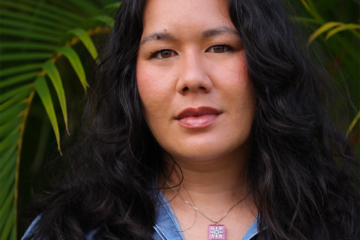
Chana Kohl works in Jerusalem in clinical trials and research, traveling and writing speculative fiction in her spare time.
As winner of the 2023 Analog Award for Emerging Black Voices, her professional writing debut appeared in the May/June 2024 issue of Analog Science Fiction and Fact.
She’s a grateful recipient of the 2024 Fresh Voices Scholarship for the Your Personal Odyssey Workshop.
Chana Kohl — Interviewed by Rebecca Roland
Can you talk about your pre-Odyssey writing process? What kind of writing schedule, if any, did you keep?
My pre-Odyssey writing process wasn’t specifically focused. I usually wrote to a story prompt or submission guidelines, maybe eked out a great beginning, then stumbled my way to an end. There were many story elements I was aware of but didn’t necessarily know how to weave together in a mindful or seamless way. Although I kept a writing schedule (2-3 hours in the early AM), I’m learning to become more flexible and tailoring different mental tasks to my innate biorhythms: deep practice in the mornings, revisions before bed.
What made you decide to attend Your Personal Odyssey?
I knew that my first stories were landing with readers, but that there was a lot about the craft I didn’t know. I took winter classes with Odyssey and became very comfortable with looking at my work objectively. I saw how meticulously the Odyssey programs were designed to guide individual writers on their own path of self-discovery, and how seriously Jeanne Cavelos and the other instructors were dedicated to improving your output no matter what level you were.
How do you feel your writing and writing process changed as a result of having attended YPO? What insights did you gain into your own work? How did taking a custom module help you home in on the weaknesses in your writing?
The biggest change is how I think about storytelling, spending time contemplating what I’m trying to accomplish before I begin. I’m more confident in allowing what I think to change, grow, and evolve. My custom module was a mashup of my two weakest writing areas. This took tremendous effort to do, but looking back, most of it was fear that I would never master it (oh, and I haven’t, but I will). I think the most important insight is to never let the fear of failing hold you back.
During YPO you met with and received detailed feedback from Odyssey Director Jeanne Cavelos, received and gave critiques, and had the opportunity to virtually attend lectures. What did you find the most helpful about the workshop?
I put the most time and effort into the virtual lectures, allowing myself to read supplemental materials and take detailed notes, but I think the most helpful activities were the journal entries: deep practice exercises where you apply what you’ve learned. This is the one new thing that I’m incorporating into my weekly routine even after the workshop. After the journal entries, feedback from Jeanne and the guest critiques were the next most helpful.
You’ve published numerous short stories, including more recently “Project Desert Sparrow” in Analog SF. How many stages do your stories typically go through before you send them off to a publisher? How much of your time is spent writing the first draft, and how much time is spent in revision? What sort of revisions do you do?
Before the workshop (I hate to admit this) I simply wrote a first draft then polished lines. My revisions never focused on any particular writing element. Perhaps if I got feedback I would add or subtract something. During the workshop, I referred to that as the “Frankenstein method” of creating a story. I would revise 30-35 drafts then send it off, with 80% of the time spent on revision. I think now that there is a major shift toward prewriting, I can get that down to 50%.
You’ve traveled quite extensively and incorporate your travels into your fiction. Do you find that your stories typically begin with worldbuilding, or with some other idea, such as character or theme? How do you weave real-world experience into your fiction?
My longer stories begin with worldbuilding, and my shorter stories usually begin with a theme, then they gravitate to one or two characters. I do keep a travelogue, accessible on my laptop and phone to document snippets of dialogue I’ve overheard or conversations I’ve had with strangers I’ve met. These notes eventually make their way into a story and inevitably end up being the dialogue and/or scene people respond the most viscerally to. Then there’s always that magical moment when you meet someone—it could be a coffee shop waitress or a tour guide—and they say or do something and it hits you: This is my protagonist. Real people never fail to disappoint!
What’s next on the writing-related horizon? Are you starting any new projects?
There are three hard SF stories from this workshop I’m really excited about and hoping to revise. Then it’s on to finishing my first novella!
Discover more from Odyssey Writing Workshops
Subscribe to get the latest posts sent to your email.