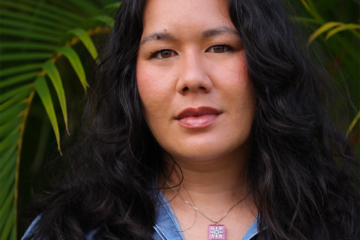
Q&A Excerpt: P. A. Cornell

P. A. Cornell was a 2025 guest lecturer for Your Personal Odyssey Writing Workshop. She is an award-winning, Chilean-Canadian speculative fiction writer. A graduate of the Odyssey workshop, her stories have been published in over fifty magazines and anthologies, including Lightspeed, Apex, and three “Best of” anthologies. In addition to becoming the first Chilean Nebula finalist in 2024, Cornell has been a finalist for the Aurora and World Fantasy Awards, was longlisted for the BSFA Awards, and won Canada’s Short Works Prize. When not writing, she can be found assembling intricate LEGO builds or drinking ridiculous quantities of tea. Sometimes both. For more on the author and her work, visit her website pacornell.com.
In this excerpt transcribed from a question-and-answer session, P. A. Cornell talks about her revision process and getting a character’s voice across through body language.
QUESTION: I was wondering if you could say something about your revising process, and maybe specifically‚ as you go through the revising process, at what point do you see that maybe you need to do a rewrite? I’m asking that because I’m in the process right now of rewriting a story that I was supposed to actually be revising, but I could tell I just needed to start over. I think it was the right decision, but it felt like a gut feeling.
ANSWER: I think you have to trust that gut, for sure. You know when a story’s not where it should be, right? Sometimes you can’t think of an answer. Like, how do I fix it? Unfortunately, sometimes you’re just gonna end up with a story that you don’t absolutely a thousand percent love. Sometimes it’s okay to have that “good enough” as a learning experiment.
But in terms of revising something that I know I can improve in some way, my revision’s kind of in two ways. Part of it is, as I’m writing, it’ll just be line-level stuff, where I’ll rephrase a sentence or whatever so it sounds better. And that I’m usually doing in the moment as I’m writing whatever draft.
When I go back and revise—and I actually don’t revise my short fiction that much, usually, because I’ve thought about it a lot beforehand, before I started writing. I kind of know what I want to say—most of the time. But when I do, then it’s when my gut is telling me this isn’t quite right. Often it’s things like the stakes aren’t high enough, or it’s just missing something, some emotion. It usually comes down to what you’re feeling—for me, anyway. That’s my experience. And then I’ll just go back and reevaluate what I’m doing.
Sometimes it’s more major, like, this just isn’t working in this point of view. I need to change things, I need to cut this character completely, or cut this storyline. But I find that, for me personally, that tends to happen more in longer works. But it still applies to short fiction.
QUESTION: My question is related to when you were talking about character voice in the lecture. You said that there are ways to get character voice across in terms of body language, so my question is: do you have any advice on writing body language that speaks for characters who aren’t big talkers? Sometimes writing body language, to me, feels like a list of body positioning and fidgeting, and it’s even more difficult when the character is not a big talker.
ANSWER: I think for me, what I’ve found is that—and it sounds counterintuitive—but that it’s actually less is more. So it’s little things that are cluing you into what this character is thinking. In that one example I gave, it was one wink. It can just be that they tend to squeeze their fists. An exhale. Little tiny things can tell you so much with one gesture, and so you want to incorporate that body language. But if you’re overdoing it, just saying every little action they do, then it comes off as, “There’s something wrong with this person. They’re moving around so much.” And even if they’re really not moving around that much, it sounds that way because there are so many different action things that you’re saying. So I do think it comes down to less is more and choosing the gesture, movement, or description that says the most in the fewest words.
NOTE: This transcript has been edited for clarity.
Discover more from Odyssey Writing Workshops
Subscribe to get the latest posts sent to your email.