Interview: Graduate Donna Glee Williams
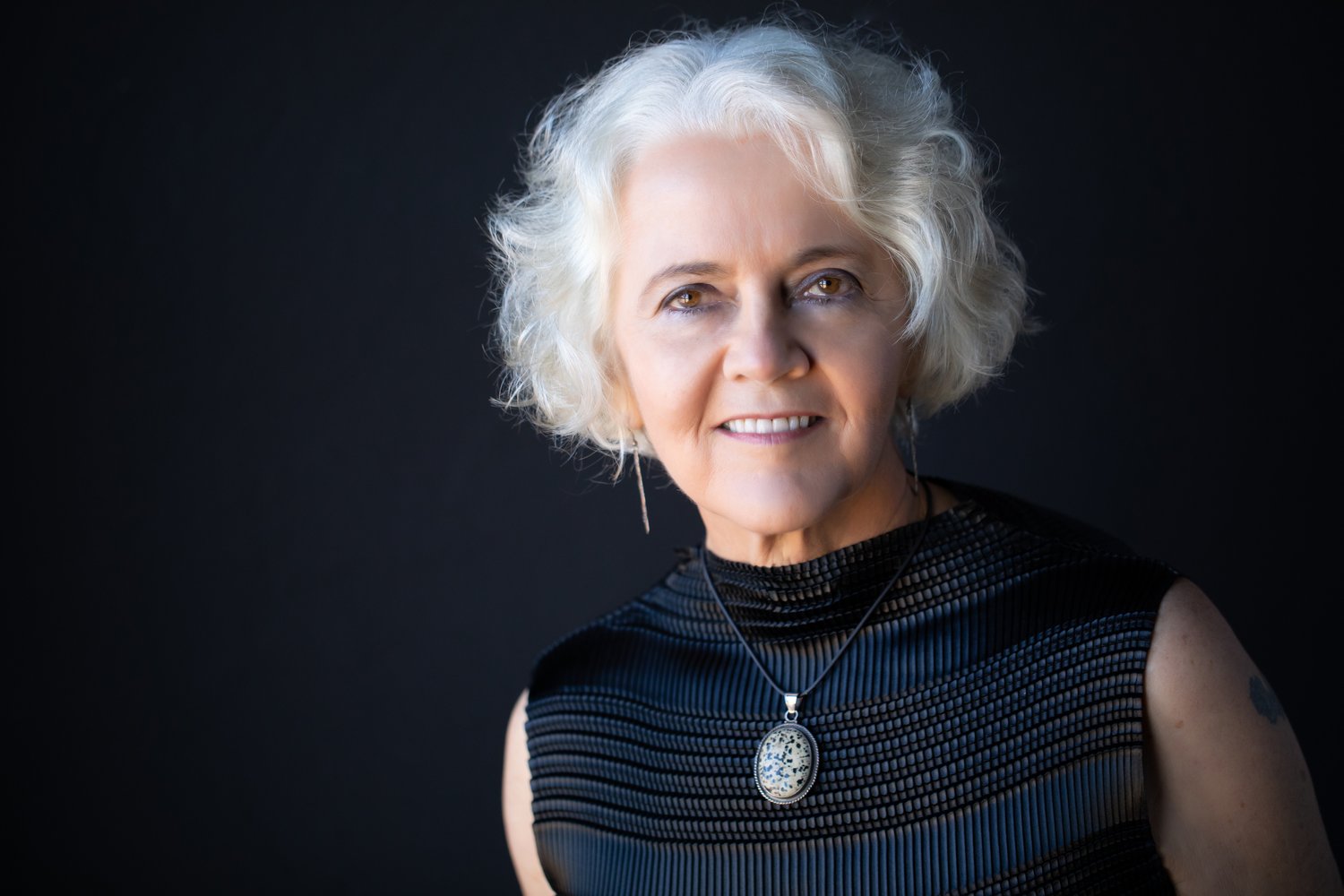
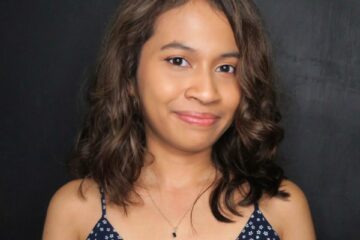
2011 Odyssey graduate Donna Glee Williams was born in Mexico, the daughter of a Kentucky farm-girl and a Texas large-animal veterinarian. She graduated from Tulane University, then earned an MFA and PhD from Louisiana State University, but it was really her years of wayfaring across twenty countries and four continents that led her to her novels, The Braided Path, Dreamers, and The Night Field. The Night Field, specifically, was inspired by studying pesticide issues among heroic cotton farmers in India on a Fulbright in 2008.
Donna Glee has worked as turnabout crew on a schooner, librarian, environmental activist, registered nurse, educator, editor, and creative coach, but these days she mostly walks in the woods, writes, and leads dream groups from her little cabin in the Blue Ridge Mountains, waiting for Mystery to tap her on the shoulder, forever drunk on the isoprene exhalations of the trees.
The worldbuilding in your novel The Night Field is rich and detailed and woven into the narrative seamlessly. How much research did you do before starting the novel, and how much did you do during the writing? Did your worldbuilding come before your characters, or did you create your characters first and then create their world?
You know, Rebecca, I don’t really “research” as such. I just live and notice things as I go along. My life’s full of wild, rich experiences that get imprinted in my body and memory and then pop up in my writing. For example, I walk in the woods a lot—hence Pyn-Poi’s forest. I’ve been involved in the Ecotipping Points Project for decades—that’s where the ecological science in The Night Field comes from. I ran a Holocaust education program for ten years and was familiar with the concept of the lager svenster or “camp sister”—I suspect that’s where the friendship of Pyn-Poi and Lakka came from. My grandmother and great-aunt picked cotton when they were girls; their stories gave me the “fiber.” And so forth—for almost everything. Very little is actually original; I’m a mockingbird, picking up bits of melody from here and there and reorganizing them into a new song.
The only actual piece of “research” I did for this book was to figure out how a Stone Age people would bring down a really big tree. Easy-peasy; I called Jeff Gottlieb, a friend in the aboriginal technology community, asked him, and he told me over the phone.
And as for the chicken-or-the-egg problem, it was definitely character first. Once I met Pyn-Poi, her world opened out around her. And once I met that world, then its problem coalesced. Once I met the problem, Pyn-Poi’s Hero’s Journey became clear.
There are multiple, unique point-of-view characters throughout The Night Field, including scenes from the point of view of trees! How did you juggle so many different characters and voices?
As some of your readers know—because they are my clients!—I run groups for people who want to explore their night-dreams for creative inspiration. One way to approach dreams comes from Gestalt theory—the idea that every single entity (whether animate or inanimate) in a dream represents an aspect of the self. So dreamers might tell or journal their dream from one point of view, and then narrate the same events over again from another point of view, and another, and another. So I have a lot experience “head-hopping” from one POV to another to flesh out a dream—or a scene.
And here’s the thing: I’ve been told by authoritative writing coaches that the best POV is the one who is most involved, who feels things most intensely, for whom the stakes are greatest. I never believed that for a minute. There’s a lot to be said for a coolly observing Other (like the child at the beginning of The Night Field) who simply reports what happens and lets (forces!) the reader to fill in what those events must feel like to the character who is undergoing them. That’s another bit from Gestalt theory: if you present points a. and c., then the mind is hardwired to fill in point b. Once you get your reader collaborating with you, filling in the things you haven’t written, they’re yours; they are co-creators, engaged and experiencing the story more deeply than if you’d served it all up for them on a silver platter. Stepping into other points of view can help to invite this kind of reader-writer collaboration.
The timeline in The Night Field jumps around from present day to Pyn-Poi’s childhood and adolescence. Why did you decide to structure the novel this way rather than telling the story in a linear fashion? How did you decide on the order of your scenes?
Now here you’ve put your finger on one of the central problems with writing this book.
It started out in straight chronological order. And then one day I went into an absolute terror tailspin about what I’d done: I’d written something that started out in a sweet Utopia, developed into an adventure story, had a sort of light comic interlude, and then spent the last two thirds of the pages in nothing but death, damnation, and despair.
You just can’t do that to a reader. The opening of a book is a contract of what the reading experience will be, and my story, with a straight timeline, violated the terms of the agreement six ways from Sunday.
Talk about despair; I thought I’d written a book that could never work. And then, by chance, I read an interview with George Saunders that said something like this: You don’t start off to write in an innovative form. Innovative forms happen when a work presents a problem that requires innovation to solve it.
My problem was that the darkest part of the book went on too long without relief. And then the ghost-voice of George Saunder whispered in my ear, “But it doesn’t have to!” That’s when the idea of chopping it to bits and re-shuffling the bits came to me, and I tore through the manuscript intuitively, finding the natural fracture lines where the story could break and reconnect in new ways.
The ending of The Night Field brought tears to my eyes! How do you go about invoking strong emotional reactions in your readers? What advice do you have for writers who want to create strong emotions?
Thank you so much for letting the book touch you, Rebecca. The heart-opening moment where tears prickle matters to me, both as a writer and as a reader; it may be that moment when fiction does its work of increasing our empathy and making us more human. Tolkien said, “Tears are the wine of human blessedness,” and I believe him. The most precious moment in the whole editing process was a short e-mail I got near the end from Jo Fletcher (who also edited Ursula K. LeGuin for 17 years!): “Fourth time reading. Fourth time crying.” If The Night Field could bring a seasoned publishing professional to tears, I knew we had it right.
As to the How—that’s a big question. I think I could probably answer it in a day-long class or a 20-page essay. Let me just say here that—for me—it involves being plugged in to a strong story, knowing a fair amount about hypnotic induction techniques, appreciating the power of understatement, graduate studies in linguistics (particularly pragmatics and the theory of implicature), and analyzing many of what Patricia Lee Gauch calls “ecstatic moments” in other writers, like, for example the fall of Gandalf or the ending of the children’s classic Wringer.
There are many themes in The Night Field, including environmental devastation and the effects it has on mental and physical health, human worth and productivity, and the futility of forcing order on the natural world. Did you have theme in mind as you were writing your first draft, or did you discover your themes after? How did you decide on your themes and reinforce them in the novel?
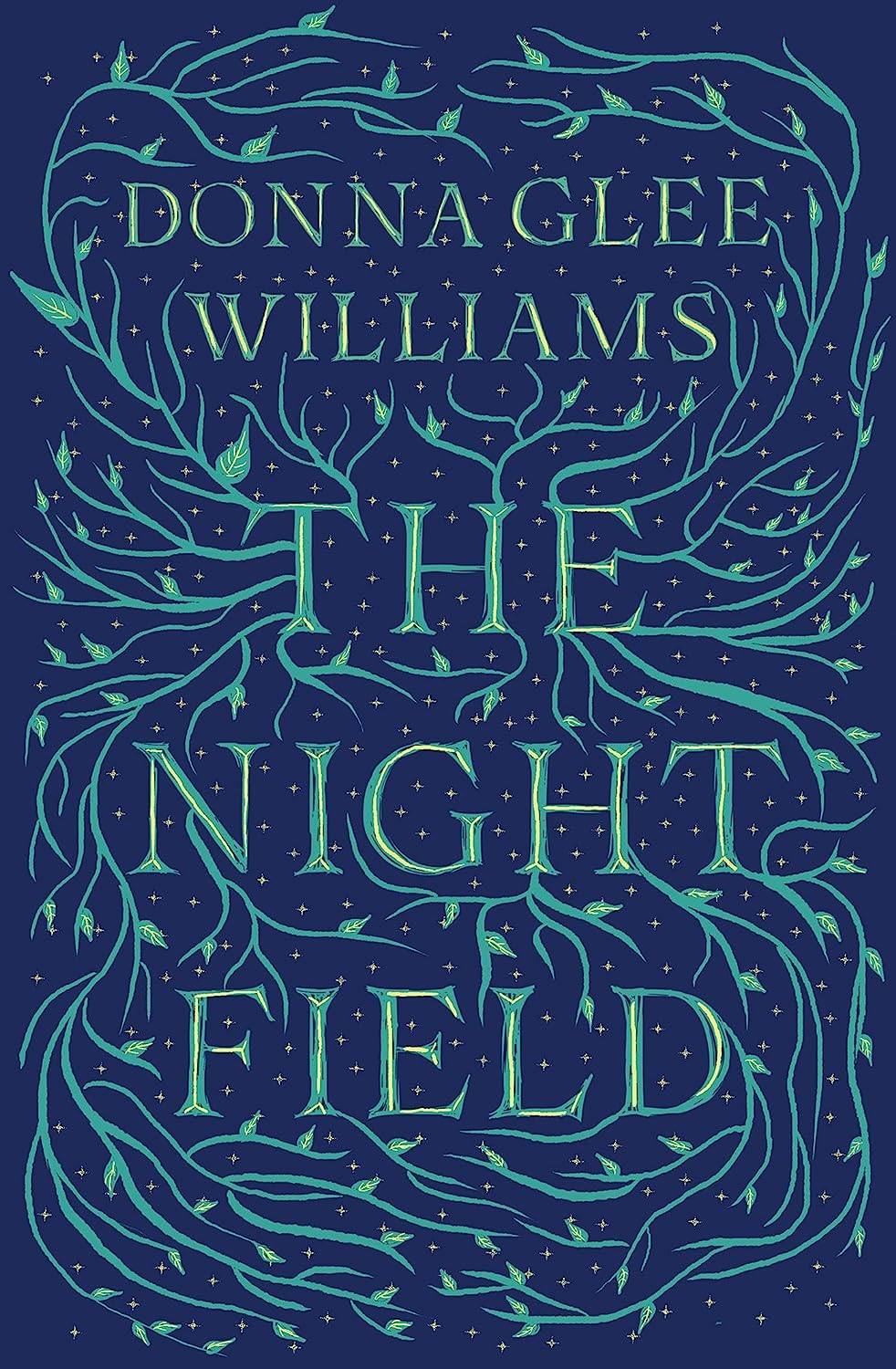
I discovered my themes as I went along. I’m such a pantser! I don’t think I could consciously plan a theme if I tried with both hands for a week.
As to how I discovered them: I’ve also worked as an editor and, after a certain amount of the story had come through, I think my editor-self was sneaking peaks over the shoulder of my writer-self, observing, pointing out connections and resonances. One theme I did have some help with. At the time, I was doing dreamwork with the great Jeremy Taylor and he pointed out that my book was lifting up a crisis in the development of human society, the historical moment when hunter-gatherers stopped merely receiving the gifts of the Great Mother and began the forceful inseminations of agriculture. That insight unlocked a lot of the story for me.
One of the themes that I noticed very late was motherhood. The book is just oozing with references to different ways of being a “mother,” nothing I intended consciously, but my editor-eye picked it up and I magnified it just a little.
And as far as the environmental devastation theme, as I mentioned, I’ve been immersed in EcoTipping Points Theory for decades (https://ecotippingpoints.org), so the idea of a destroyed ecosystem tipping back towards life-sustaining diversity through the intervention of an “insider-outsider” pulling the levers that allow Nature to do the work—that theme practically built itself, once I saw what the problem was.
How many stages did The Night Field go through before you sent it off to your publisher? How much of your time was spent writing the first draft, and how much time was spent in revision? What sort of revisions did you do?
Now you are asking me something I truly can’t answer—at a guess, the number of stages was in the scores. When I looked back at my saved files, I saw that I started laboring at the short story I thought I was writing, called “Bridges” at the time, in 2012. I just couldn’t make it work; no matter what I did, it came out too preachy.
It took me a while to figure out (and Barbara Kingsolver was my guiding light here) that the solution to the preachiness wasn’t to back away from it but to lean into it! How weird—the harder I punched in the environmental message, the less preachy it sounded. Tragic—lazy hound that I am, I really wanted this story to be a short—but by then, the story had a hold of me and there was no place to go but forward. Pages began to stack up.
By 2014, I find drafts of something novel-length called Building Bridges. But then I outsmarted myself and almost derailed the whole choo-choo.
In 2015, I took the story to a workshop that focused on plotting, planning, and outlining. Arcs and acts. Post-It slips and butcher-paper galore. I got some good stuff out of the experience, including the insight that such a big story would need more than one principal character to carry it, but trying to pre-plan offended my natural creative process so badly that I didn’t write again for a long, long time. Let that be a warning to my sisters and brothers in writing: In the creative life, it’s often helpful to shake things up, to try on new tools and approaches. But, if you are an intuitive, fly-by-the-seat-of-your-pants writer, be very, very thoughtful about experimenting with thinking things out before you write. There be dragons.
That big, colorful, well-organized butcher-paper storyboard hung accusingly on my kitchen wall for a year, until I finally crammed it into the trashcan and rolled up my sleeves again in 2016. To give myself a fresh start, I shifted from Word to Scrivener, and as I look over my files, I find my first Scrivener Compiled save in 2017. I start finding files saved as The Night Field in 2018, and The Night Field Intercut—that’s when I sliced and diced the chronology—in 2021. That’s also the year when I sent it off to my agent Richard Curtis, who made me put the chronology back in line again.
Remember what was happening in 2021? My poor book, after some serious re-writing for Richard, went out to publishers in the middle of what must have been the worst time to sell a book since the Great Depression. A long wait. Crickets and hoot-owls. More waiting.
But finally, Jo Fletcher nibbled and Richard told me to “assume the prayer position and don’t get up until I tell you.” More waiting. Much back-and-forthing about who I was and what I’d done.
Then, after the sale—Yay!—more re-writing with Jo’s near-shamanic insight on my side, adding the bits of the story that she knew were out there somewhere, taking away some bits that she and Richard agreed did not belong, and re-scrambling the timeline.
Then another stage in which the magnificent Ian Critchley wreaked consistency on my naming conventions for the people, critters, and plants in Pyn-Poi’s world. He also did his level best to anglicize my spelling, punctuation, and grammar—tears were shed, therapists consulted, compromises made. Deep cleansing breaths.
And then: The beautiful, beautiful typeset phase. The gorgeous cover that made me cry. “They’re taking my book seriously,” was all I could say. And they did, at every phase—this kind of book could NOT have happened without the loving attention of the truly mighty: Editors Anne Perry and Jo Fletcher. Agents Richard Curtis and Sarah Yakes. Ian Critchley, old ojo del águila.
What’s next on the writing-related horizon? Are you starting any new projects?
As a matter of fact, I have a couple of things coming out this year—a poem in Sage Woman’s “Wild Women” issue, and an essay and short story in Psychological Perspectives. That story—a re-imagining of Medusa—is particularly interesting, because it’s a collaboration between a dreamer, Jay Joslin, and a writer, me. I’m not aware of other examples of this kind of shared work.
The dreamwork continues to be a major delight and creative outflow for me. Any of your readers who are interested in getting into one of my dream groups would be welcome to reach out to me through DonnaGleeWilliams.com and we’ll find a place for you.
I’m heading out this summer for a seven-week writer’s residency in a little castle on an island off the coast of Scotland. The isolation, change of routine, and fresh landscapes of artist’s retreats have always been very, very good for me; we’ll see if I start something fresh or finish one of several projects I have going. Writers who have the freedom but not the funds to get away and focus on their writing for an intense period really should investigate writer’s residencies—there’s gold in them thar hills, creatively speaking.
Rebecca, I want to thank you for giving me a chance to make my very first interview about The Night Field be for Odyssey, where everything began for me. When I sold my first book over-the-transom that summer, Odyssey Director Jeanne Cavelos told me, “When an offer is on the table, agents will return your call.” Based on that, I called an agent who was way better than I deserved and, when he took me on, Jeanne said, “Richard will take good care of you.” And she was right. She usually is.
Discover more from Odyssey Writing Workshops
Subscribe to get the latest posts sent to your email.
1 Comment
scottmatthewgray · September 10, 2023 at 12:25 pm
What a lovely interview! I learned so much! Thanks for sharing your experience Donna, and thanks to Rebecca for the excellent questions. Best! Scott
Comments are closed.