Interview: Graduate Kate Alice Marshall
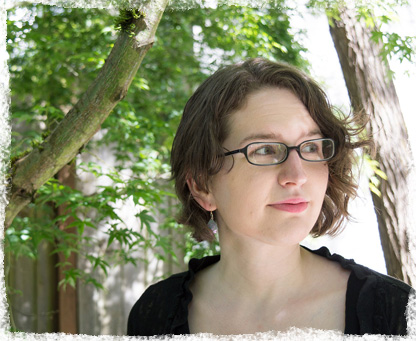
Kate Alice Marshall is a 2005 graduate of the Odyssey Writing Workshop. She is the author of young adult and middle grade novels, including I Am Still Alive, Rules for Vanishing, and Thirteens.
Kate lives outside of Seattle with her husband, two dogs named Vonnegut and Octavia, and two kids. They all conspire to keep her on her toes.
You have been providing critiques for Your Personal Odyssey. What do you feel is the best way for writers to incorporate the feedback from critiques?
I view critiques as a conversation between writer intent and reader experience. So when I give critiques, I try to look at what I think the author is intending—what effect they are trying to create, what emotion they are trying to inspire, what theme they are trying to explore—and use that lens in crafting my feedback.
It’s also a very useful perspective in receiving critique. I try to view all feedback not as “good” or “bad” but as a genuine reflection of a reader experience which needs to be considered and held up against my intent for the piece (with the exception of feedback that reflects bias or bigotry, which can generally be discarded out of hand). It’s neutral information: a reader had this experience of the piece; do I want them to? How do I think I could change the piece in order to create the experience I do want?
This really helps filter out individual taste—maybe your critique partner doesn’t like your hero because he’s weak-willed, but your whole purpose was to explore a weak-willed person and how they could still be heroic. So the question becomes not “Should I change my hero to suit this person’s taste?” but “How can I better make the hero’s struggle with being weak-willed more engaging?”. Of course, you might find that the only insight gained is about the mismatch in taste between your reader and your work—one of the most important skills in receiving critique is in fact knowing which ones you should not incorporate.
When I’m working with editors and trusted critique partners, if I have a negative reaction to a note and want to dismiss it out of hand, I instead give it a special moment of consideration. Every once in a while I find that my strongly negative reaction is not because the note isn’t useful, but because I’m intimidated by the work it would take, or it contradicts the version of the story I have in my head in a way that’s startling, or some other not-so-useful reason. When I’m being especially virtuous I make myself come up with how I would incorporate that change even if I think it’s the worst note I’ve ever heard in my life—only then am I allowed to ignore it. A surprising amount of the time, I end up liking the change that I made. The worst that happens is that it lets me think outside the box and shake up my preconceptions.
You attended Odyssey in 2005. How are the critiques you provide now different from the ones you provided to your cohort in 2005?
Well, they’re much better! But I suppose that goes without saying. When I was first starting out, I had a hard time seeing beyond my subjective experience of a story. One thing I’ve gotten a lot better at is engaging with the story outside of my personal taste and paying attention to what the author is doing. I’ve also tried to focus much more on identifying the existing strengths of the story and bringing those into the forefront. Critique has a tendency to drift into talking about only the weakest elements of a story, and I think truly memorable fiction often functions by leaning into its strengths. If we forget to give those strengths as much attention as the weaknesses, we can lose the spark that makes the story stand out.
You started out writing Middle Grade and Young Adult books, then recently published two adult thrillers, What Lies in the Woods and No One Can Know. What were the challenges in switching genres and intended audiences? What do you think are some of the advantages in writing different genres and for different audiences?
I love writing for different age categories—it’s a fascinating challenge and a fun way to keep the writing fresh. I find that I tend to be drawn to similar subjects and themes in multiple age categories, but they are expressed in much different ways. The biggest difference is in the rather obvious fact of the age of the characters and how that dictates the depth of their history, relationships, and backstory. Like, if you’re writing about a sixteen-year-old who’s lost their true love, that presumably happened sometime in the last six months or so. It’s probably not a coincidence that in my adult books, I really love stories about things that happened decades ago coming back to haunt the main character—which is just not something that can happen to a teen character. If I’m looking for that depth of history in the younger categories, I’ll reach for family history or something similar. I love getting to take a theme and explore it through very different characters and stories.
Middle grade in particular has been a joy to write and has taught me a lot about writing emotion. You just can’t write middle grade authentically from a cynical remove. The emotions are so intense and present and so sincerely felt—getting into that space means cracking open some parts of my heart that I normally keep tidy and out of the way. Middle grade is the only category that ever makes me tear up when I’m writing, but it’s also where I can go to be a little bit silly and a little bit sappy.
What advice do you have for writers who are looking to take their craft to the next level?
One of the best things I ever did for my writing was take a poetry class. I haven’t written a poem since, but that class taught me a new way of looking at sound, meter, meaning, and so much more. Breaking out of my comfort zone and studying other forms of expression, other genres, and wildly different styles has always coincided with my periods of creative growth.
Reading widely can teach you a ton about technique—maybe you try some romances and pick up tips for creating relationship arcs and banter, or you pick apart the way information is revealed in a thriller to keep the tension up, or you study the way time is compressed and dilated in a literary novel to cover decades in a paragraph and seconds in a hundred pages.
What advice would you give writers to get the most out of a workshop like Odyssey?
I think with workshops like Odyssey, the lessons often sneak up on you long after you graduate. I definitely found that when I left Odyssey, I didn’t know what to do with all the new knowledge I had, and I felt a little panicked! But the most valuable thing Odyssey gave me was a framework and vocabulary for learning. Treat the lessons in workshops not as the end goal—a box to be checked off, a new thing learned and accomplished and complete—but as a beginning. They’re teaching you how to learn, study, and practice, and that never ends.
A lot of people find they have a bit of a creative dry spell after intensive workshops like Odyssey, which is understandable and not always a bad thing—if you can go about it deliberately. You’ve got this amazing new set of lenses to view fiction through, so go apply them. Not to your own writing, if you aren’t ready for that yet, but to everything else. As you study other writers, you will be able to take the framework the workshop provides and translate it into a rich library of knowledge and inspiration.
Discover more from Odyssey Writing Workshops
Subscribe to get the latest posts sent to your email.