Interview: Graduate V. Voya Tse
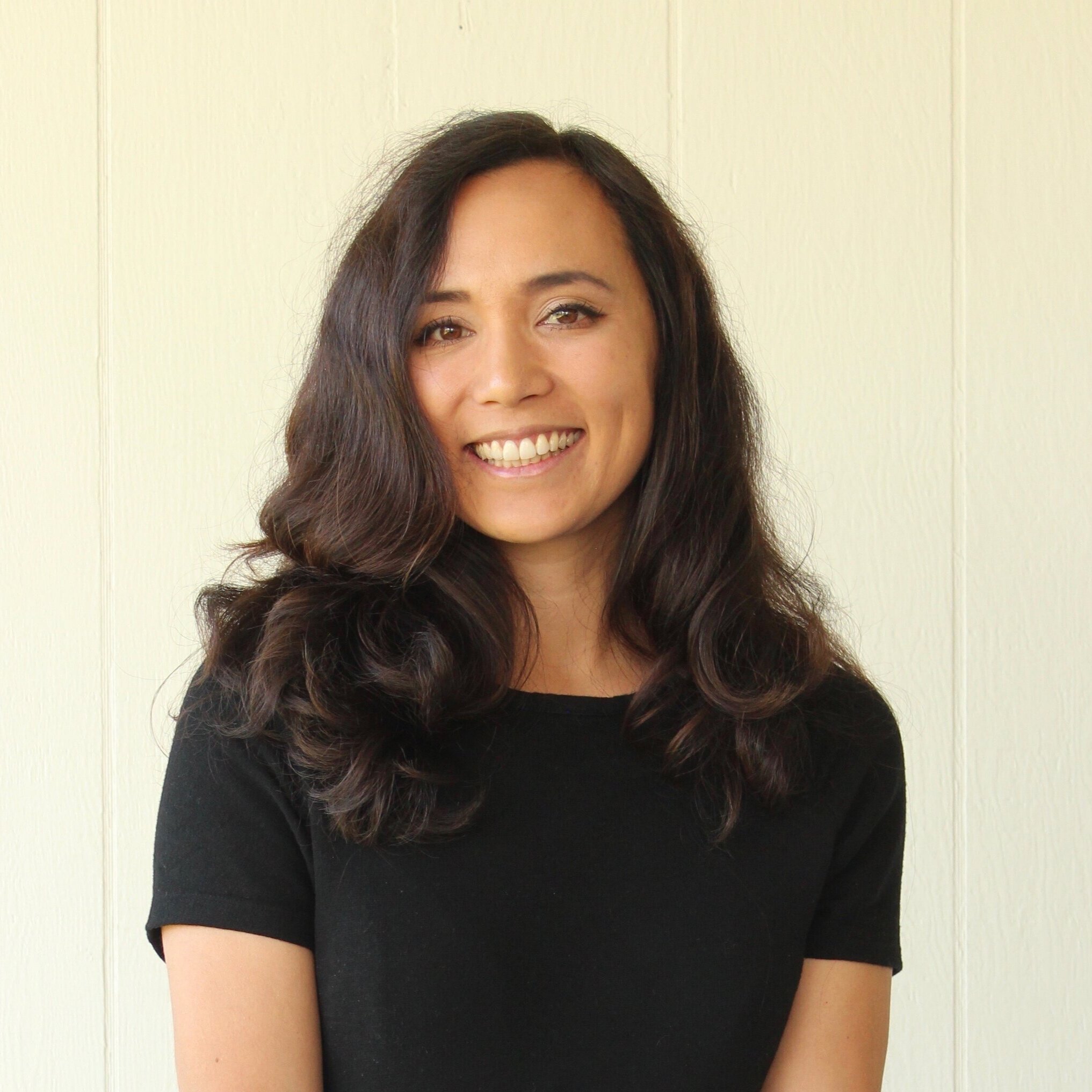
V. Voya Tse was raised in the mountains of Western Canada, but now resides in the Indian Himalayas. She works alongside two orphanages and co-founded a Fair Trade company, Fazl, which provides ethical wages to hundreds of women in need and helps support the children she loves. She is a graduate of the 2022 Your Personal Odyssey Writing Workshop and received the Walter and Kattie Metcalf Singing Spider Scholarship.
But the main things to know are: she loves the wilderness and eating noodles! Vanessa is either out exploring, orchestrating contests and tournaments, or chatting someone’s ear off … Or reading/writing and refusing to eat, sleep or talk while doing so.
Vanessa has a BA, a B.Ed., and a MA with a focus on resilience. In a wonderful twist of fate, her company, Fazl, creates beautiful reading socks. Fazl has been picked up and featured in Vogue, UNICEF, The Drew Barrymore Show, Anthropologie, and many others—she has yet to stop levitating with happiness about it!
NOTE: This interview was transcribed from a recording and has been edited for clarity.
You graduated from Your Personal Odyssey in 2022. How did you fit the YPO schedule into your life at home? How did your writing change as a result of going through the workshop?
Because of my commitments to the children’s home and running a business, it was a little bit tricky, so I talked to my business partners and asked for a leave of absence. There was no way I could be running a business and attempting the workload of YPO. The timing for me to do the summer session, six weeks, was perfect because it wasn’t in our socks season. I wasn’t trying to prep shipments, and we weren’t in the middle of trying to sell them all around the Christmas season. And then at the children’s home we just informed them. India—and Asia in general—is very, very pro education, so everyone was excited for me to have this chance and supported the long hours of study. So they knew that for six weeks I was around, but they weren’t going to see me as much as usual. Those things helped me to step back, and so pretty much all I was doing was Odyssey and a minimum of whatever else I needed to do for the rest of my life.
And then my writing radically changed as a result of Your Personal Odyssey. It was definitely a completely life-changing experience. I think having a chance to do that level of mentoring with Odyssey Director Jeanne Cavelos was beyond my expectations, because I think it was sort of a two-fold process where Jeanne comes in like a doctor to examine the situation, to examine the patient, but also I kept thinking a lot of the metaphor of an orchestra, where as a writer you have a lot of different sections going on—plot, character, emotion, theme. And every writer has their own unique constellation of strengths and weaknesses. So to have Jeanne dive in deep for me was so incredible.
One time … we were going to work on character arc, work on the antagonist, but it was like, okay, this stuff is looking pretty good, and over here—we called it my atrophied plot muscle. Let’s say it’s the percussion section, it was like we have almost no heartbeat over here. Rather than spending the allotted time here, here, and here—I still did all the modules, but she bored really deeply into that area to try and help me lift two pounds with my sad little plot muscle.
What we did do a lot of, we called it “idea fest.” I came to her with my novel, and I said, “Look, I don’t write short stories, I don’t even read them, and my agent is expecting this book from me anyway, so can we work on it together?” So most of Odyssey for me was directed at developing the manuscript that I had. What we would do a ton of in an idea fest was say, “Okay, so we want to do this thing,” and then go through the possibilities. It was so helpful for me to talk to Jeanne and say, “So, what about this idea?” and have her say, “Well, if we did this, or what about this, or if we don’t do this,” and her putting ideas out there helped me to see. It’s almost like an apprentice working with a master, being like, “Why does one idea work and function really well in a plot or story, and why does a character work really well to help the protagonist?” versus why an idea doesn’t work or why that idea is causing problems. So it’s sort of like us holding the clay together and pushing it around so I could learn by doing it with her.
You’ve written a Himalayan-inspired fantasy novel. Did the setting come first as you were creating this story, or did character or some other aspect come first? What inspired this novel?
I often sit on an idea for a couple years before I start writing it because I don’t want to tackle it if it was just a flight of fancy. So I had been sitting on this idea awhile before I started, and I had done a draft of [the novel] before I came to Odyssey. It was completely torn apart and reborn.
I think the character and the setting for me often emerge together. I love the Himalayas so much. Like even right now I’m looking out my window; I can’t even see the sky, I just see mountains around me. I’m inspired by the types of stories that are possible in this really unique setting in the world. So I had this idea of this young woman and this invading army coming into her valley, which is essentially enclosed by a giant ring of mountains that are magically [treated] to keep people out. To me that feels really natural because, a lot of the time, people in my area in the winter, when the snow seals us in—you have to be self-sustaining because we’re not going anywhere. There are no snow ploughs, there are no trucks coming in. And even the further regions can be cut off for months. You’ve gotta live off dried food; you have to do what you have to do.
All that to say, I had this idea of these characters and I wanted to play with the push and pull of the lead general and [the young woman] and their interactions together. So I was really interested in these characters, but it grew organically out of this place and what sort of stories are possible in certain settings. I think it’s no different than if I was really into pirates; what sort of stories are possible on a pirate ship lost at sea? Or if you have a more sprawling landscape, you can do different sorts of things. I had a math professor, of all things, who called these enabling constraints, but I find it helps my imagination to have these enabling constraints on me. Only certain types of stories are going to be fully realized here. I like working in that, and I feel like it helps me, rather than pulling on a lot of things, to try and go deeper into one idea. I have a lot of rock magic, so I think, “Okay, what is possible with the people that are just focused on rock magic, stone mages, the mountains here?”
There is a mountain pass through here—we finally did it after twenty years or more. It’s nine kilometers long to get through the mountain. My magical mountain wall is only two kilometers thick because I didn’t think anyone would believe me if I did the nine kilometer thing even though that’s the reality here. So I think there’s so much that inspired it, and the setting and the characters emerged together and inform each other. And then then the plot came laboriously afterwards.
How many stages did your work go through before you sent it off to your agent? How much time did you spend writing the first draft, and how much time in revision? What sort of revisions did you do?
I was working on revisions for a different book that was on submission at that time; it was hard because I wasn’t just writing [one novel]. I’d write that and then do a pass on my other thing and then go back to it. I would say at least six months I had been drafting [the novel] off and on, and then I had worked the beginning enough that I felt comfortable sending it in to Jeanne. And then she and I worked that piece pretty hard together in a really exciting way.
Okay, so when I said I had an atrophied plot muscle, it’s so embarrassingly bad, so I had drafted it and drafted it, and I hadn’t even finished it because I didn’t know where I was fully going with it, which is embarrassing to say out loud even now. Jeanne looked at it and she said, “Vanessa, this isn’t one book. This is probably three books you’ve crammed into this thing.” My main issue was very compressed plots because I would just write. It doesn’t mean that my writing is very spare; I would write the heck out of a couple scenes that I was into and I would move us on. There was no scene and sequel! I was plowing through, cramming exposition in. Characters had to move on where I wanted them to go, which did not work. With Jeanne, we had to dig into that pretty heavily, and so after six weeks of Odyssey—I graduated in July 2022—I rewrote the entire manuscript and sent it to my agent in December. Then I got revisions back from him, and I’m in revisions with that now. I’m trying to balance out some of the elements, and then I am hoping to send him this next draft—this would be draft three—I’m hoping to send him in two weeks.
What is the biggest weakness in your writing these days and how do you cope with it?
I would say definitely the one that Jeanne identified, which like I said is having a compressed plot, and then my agent did notice that I might’ve overexpanded some things. Right now I’m in a place, too, where you get advice and you have to be careful to moderate yourself so you don’t swing the pendulum in any one direction too hard. I think having a sense, after Odyssey, of how acts work was mind blowing to me. But making sure that my characters’ goals, and the plot, and overall things are all working together so it’s cohesive.
I was talking to my critique partner the other day, and we were just saying that I noticed that authors tend to get divided into plotters and pantsers, but I was thinking it might be a little bit different than that. I’ve noticed that some writers are in a movie metaphor, like the mindset of the director. They’re moving all the pieces, and they’re thinking through those plotlines. And then there’s writers like myself where I’m almost always in the head of my character, which is helpful with emotion and their arc and their growth, but it can be difficult because they’re doing stuff, but they’re not doing plot stuff. So I think one of my biggest weaknesses is pulling myself out of my character’s mind enough to be like, “Is this scene going anywhere? Is it going to be a unified story?”
You co-founded a fair trade company, Fazl, which makes socks, among other cozy items that I feel would be perfect for curling up in a quiet reading nook. How do you balance your writing with the other passions in your life?
Oh, great question. One of the things I try to do is be quite rigorous with my writing time. I will get up at four or five in the morning to write. I will block off time and be like, “This is what’s happening now,” and that’s it, and I’m not available for anything else. Because we started this company together with our partners, we are our own bosses in a way too. If I want to start the workday with my Fazl work and [write] later, I could do that. But also, the thing I found the most is if you really love it, it’s almost like I feel like I’m not fully alive if I’m not writing. So even though it can be difficult with early mornings, or sitting down to write again after work, this is what I need, this is what I have to do.
I try to also find little strategies to make it feel rewarding for myself, like me and my critique partner will set up writing sprints together, or I’ll print off pages and go outside in the beautiful setting. I think also sharing your passions with others helps, like the little children at the home are so sweet. Whenever they see me with a new book I’ve ordered, because I help with their reading programs, they’ll be like, “Is that your book?!” They’re cheering for me to do this, so I feel like their support also helps.
At first when you get into writing, I think you feel embarrassed because of all the failures with trying to get an agent and the rejections, but what I’ve found is that people are really supportive and if you’re going after it, sometimes inviting people on that journey with you keeps you motivated. The kids are waiting for my book to come, as am I. And I think you also get to a point in your journey where you and your family have all made sacrifices, and I cannot quit now and I have to get this done.
What is a book you read recently that stood out for you, and what’s something you took away from it that you have been applying to your own writing?
That is such a perfect question because I was doing some deep practice on the book Uprooted by Naomi Novik. That book won a slew of awards, so it was critically and commercially acclaimed. I loved her emotion work. She uses the full gamut of the emotion techniques that Jeanne teaches us, so it was neat to see how that’s being done, and being done really well. She does a lot of great work with subtext; that’s one of my other weaknesses, not having enough subtext and seeing, “Oh, this is how it’s done.” I’m picking up on all this, how you can say things without needing to say them explicitly.
The other thing I love is her use of themes and symbols. The main theme is about being uprooted, rootedness and a lot of work of contrast with characters. But another subtheme, in my mind, is if you love the wrong things it can destroy you. There are characters who chase after things obsessively, and those things literally turn into monsters and destroy them. But also, loving the right things can be life-giving, and life-giving for other people too. I liked analyzing how Novick uses characters, especially in the ways that contrast, and how it’s not just that you have to say the theme through characters talking or arguing, but it’s breathed into their interactions with the world. She has a very unique style as well, so it was interesting to read long sentences with short ones punctuated here and there, and notice how those things are working. She was firing on all cylinders on that book.
What is next on the writing-related horizon? Are you starting any new projects?
While I was waiting to hear back from the agent with my current manuscript that I’m now in revisions on, I had started another one, and that one was more inspired by the cold mountain deserts of the Himalayas. It’s a bit Silk Road inspired too. I wanted to do a fantasy contest book. I’ve drafted the initial draft, and one thing that was such a gift out of Odyssey was that Jeanne helped me hone a process that works for me. I’m allowed to, on my first draft, to pants, whatever I want. I don’t even write in order. It’s very explosive and chaotic and a little terrifying, but I try to lean into the utter chaos of it all. It just needs to all get out there. So now that I’ve written this terrifying first draft, I need to go through and read it and put together a reverse outline of what parts I have and what parts are totally missing. And it has smell magic; I’ve always wanted to do something with that.
Discover more from Odyssey Writing Workshops
Subscribe to get the latest posts sent to your email.