Q&A Excerpt: Barbara Ashford
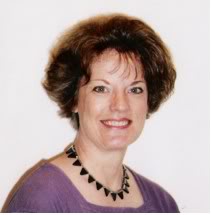
Barbara Ashford was a 2025 guest lecturer for the Your Personal Odyssey Writing Workshop. Barbara has been praised by reviewers and readers alike for her compelling characters and her “emotional, heartfelt” storytelling. Her background as a professional actress, lyricist, and librettist has helped her delve deeply into character and explore the complexities of human nature on the stage as well as on the page. Her most recent musical—Just Desserts—opens in New York City in January 2026.
Barbara’s first published series was the dark fantasy trilogy Trickster’s Game (written as Barbara Campbell). Published by DAW Books, Trickster’s Game was a finalist for the Mythopoeic Society’s 2010 Fantasy Award for adult literature. She drew on her musical theatre roots for her second novel series, the award-winning Spellcast and its sequel Spellcrossed, set in a magical summer stock theatre. DAW Books released the two novels in an omnibus edition: Spells at the Crossroads.
A graduate of the Odyssey workshop, Barbara has taught eight online courses for Odyssey and has served on the staff of the Odyssey Critique Service for more than a decade. You can visit her dual selves at barbara-campbell.com and barbara-ashford.com.
In this excerpt transcribed from a question-and-answer session, Barbara talks about how her acting background, particularly improvisation, has informed her writing.
QUESTION: You had mentioned that you relied upon beats in your acting career and experience. I was interested to hear more about that and the lessons that you take from acting preparation into the writing sphere.
ANSWER: I have found it very helpful. One example is the art of improvisation, which I used in the theater. I have found, sometimes, when I’m trying to work out a scene in my head, I’ll act it out. I’ll act out every character, I’ll play all the parts, and I’ll just go with the flow, I’ll be in the moment. What that has done is, if I’m really not trying to direct the scene and I’m just going with it, there have been surprise turns that I wasn’t expecting.
When I was writing this one scene, I had originally planned to write it from one point of view, and I thought, well, this is going to be really dull because we all know that this character is going to go with the trickster even though his parents are saying, “Please don’t go.” But we know he’s going to go or Barbara wouldn’t have a story. So what I did instead was, in the course of this improvisation, this piece of information came out that impacted this character’s older brother. And that was a surprise to me. So I ended up writing the scene from the older brother’s point of view, and then the scene was more interesting because this surprise information changed things for the whole family. It changed things for the brother, and not only does the one brother leave home, but the other one does too.
So improvisation is one of the biggest takeaways I have in terms of my acting. And the other is just being true to the moment and understanding how you feel, good or bad, right or wrong, at every moment, and to bring that kind of emotional truth to every moment of your writing as well.
QUESTION: Aside from beat-to-beat analysis, are there any other tools you bring from your experience as an actor and the stage that you bring into writing prose?
ANSWER: I mentioned the improvisation. That certainly has helped me in terms of freeing me up. I think the other thing that helped me a little bit is stage directions. If I’ve got a big scene with a lot of people, to keep it all in my head I find that if I picture it like a stage and how they’re interacting and what the set looks like, that helps me with the real physical setting aspects of a story. And I think any time I do any kind of brainstorming, when I’m looking at a character, I try to look at: Where did this character come from before the play started? What’s this person like? Why is the person like they are now? And that helps me flesh out the character with stuff that may never be addressed on stage. That same technique has helped me flesh out the backstory of characters.
NOTE: This transcript has been edited for clarity.
Discover more from Odyssey Writing Workshops
Subscribe to get the latest posts sent to your email.