Interview: Graduate Ai Jiang
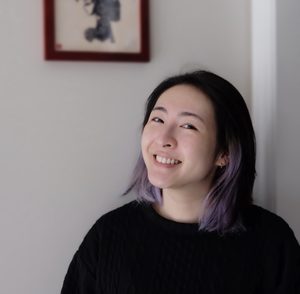
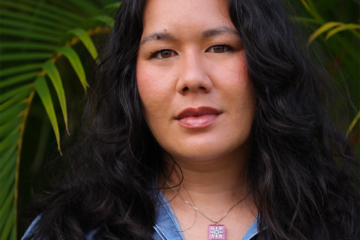
Your Personal Odyssey graduate Ai Jiang is a Chinese-Canadian writer; Ignyte, Bram Stoker, and Nebula Award winner; and Hugo, Astounding, Locus, Aurora, and BFSA Award finalist. She was born in Changle, Fujian, and currently resides in Markham, Ontario. Her work can be found in The Magazine of Fantasy & Science Fiction, The Dark, Clarkesworld, and The Masters Review, among others. She is the author of An Empire in the Clouds, the Natural Engines duology, Linghun, and I AM AI. Find her at www.aijiang.ca.
Ai Jiang — Interviewed by Rebecca Roland
You attended Your Personal Odyssey in the Fall 2022/Winter 2023 session. How much has your writing continued to change or develop in the past few years? How has Odyssey continued to advise your craft?
I think as I move away from short-form writing, my long-form writing is continuously evolving and, I hope, improving. I’d like to say I’ve come to better grasp long-form pacing with each book I write, but beginning a new project still isn’t easy. I continue to think back on the tools I’ve acquired from Odyssey, as well as Director Jeanne Cavelos’s advice, particularly when it comes to plotting my novels and incorporating the “surprising yet inevitable” for more satisfying endings and storytelling for readers.
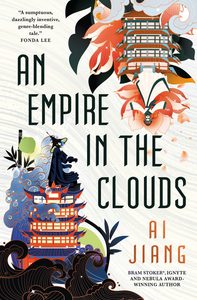
Congratulations on your first novel-length piece, An Empire in the Clouds, published in September 2026! What challenges did you find in writing a longer piece after writing novellas and short stories? How do you determine whether an idea is appropriate for a short story, a novella, or a novel?
Given that this was my first novel-length project and told in dual POVs along with some experimental language elements, it was quite difficult trying to navigate the planning for each POV and balancing them. It was also difficult at first for me to think about subplots and fleshing out the narrative because I’m so used to writing sparely for novellas and short stories. Usually what determines length of a project for me is the number of events occurring through the work, the characters and their journeys, the level and intricacy of the worldbuilding, and how much space is necessary to really flesh it out.
Your novella, A Palace Near the Wind, is a secondary world science fantasy story featuring a non-human protagonist. What did you come up with first when you wrote this story? Was it a character, an idea, or the world? How much worldbuilding did you do ahead of drafting, how much during, and how much after?
My initial idea was Blue Beard, where industrialism is Blue Beard and nature is the wives. So usually I come up with a concept, an interesting idea, before I build around it. Prior to Odyssey and shortly after when I was still trying to digest everything I learned, I did little prewriting, but I think with each project and tight deadline that comes my way, especially if the project is fantasy, I find myself doing more and more outlining and worldbuilding prior to starting.
One of your most recent short stories, “Memories Are Only Valuable if They Can Be Lost,” came out in Clarkesworld and is told in second person. What led you to make this stylistic choice? How do you determine which point of view to use in a story?
Usually, I like to use the second person when the narrator feels as though they are not in control of themself and their life, when characters are speaking about someone else, or when characters are living their life with a sense of duty for another or for family, essentially playing a role as a part of a greater whole rather than as an individual. For this particular story, my approach is the third choice.
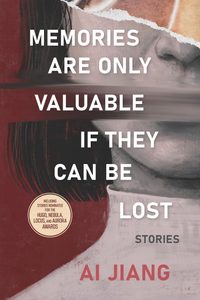
You also have a short story collection by the same name—Memories Are Only Valuable if They Can Be Lost—coming out in 2027 from Shortwave. What are some of the common themes in your work? Do you tend to come up with theme before drafting, or after? Do you find yourself returning to the same themes time and again?
Many of my projects tackle questions of migration, immigration, and diaspora, of being in between cultures and places, of placelessness and homelessness, of identity and family. I think because these things are so present in my own life, both consciously and unconsciously, they bleed into everything I write, and my understanding of each of these themes, my thoughts on them, evolves across my work over time.
What is a story you read recently that drew you in, and what did you take away from it for your own writing?
A book I read recently that really resonated with me is Convenience Store Woman by Sayaka Murata, and what draws me most about not just the book but Murata’s writing in general is the way that she explores the violence of mundanity, of familial and societal pressures in a quiet, muted, yet juxtaposedly insistent way.
To receive posts from the Odyssey Blog via email, subscribe below. For additional information about Odyssey Writing Workshops, including the latest news on upcoming programs and special events, you can also sign up for our newsletter.
Discover more from Odyssey Writing Workshops
Subscribe to get the latest posts sent to your email.